
If you are not currently in London, we urge you to go there immediately! In his gallery at 18 Cecil Court, Emanuel von Baeyer is exhibiting a superb selection of artworks by none other than Carel de Nerée tot Babberich! On view till june 13. You, dear reader, are of course already familiar with and admire the work of this master. Following the presentation at the recent TEFAF, where I gave a well-attended talk, this is an opportunity for the British public to admire some of De Nerée’s extremely rare drawings in their original form. Let’s hope this generates even more attention outside the Netherlands for this world-class Dutch artist. (And perhaps enough interest to enable the publication of an English translation of my biography with, together with Dick Veeze, a catalogue raisonnée (if I may be so shamelessly opportunistic.) In any case, there has always been more interest in De Nerée in England than in the Netherlands. For example, a masterpiece by De Nerée was on show at the major Aubrey Beardsley exhibition in London in the summer of 1966: the start of the global Art Nouveau revival. And, as you know, one of the greatest collectors of his work was Barry Humphries, a.k.a. Dame Edna.
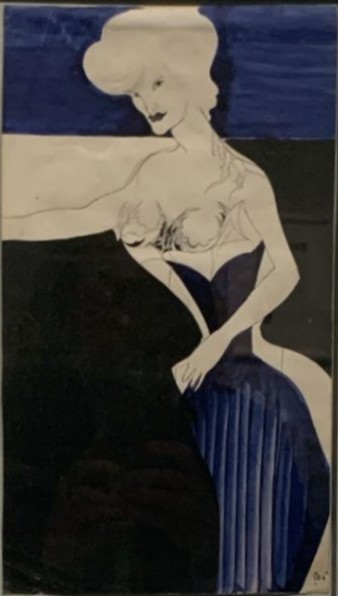
Von Baeyer has long been a great admirer of the artist and, in recent years, has managed to unearth a number of masterpieces that had slipped under the radar. This portrait of a standing person is a wonderful find. It is signed, something De Nerée rarely did, which proves that he was pleased with the work and that he may have intended it for sale. This is exceptional, as during his lifetime he largely kept his art to himself, making it all the more rare. The condition of the watercolour is also excellent. Unfortunately, this is often not the case, and his delicate works are frequently somewhat discoloured. That is certainly not the case here, and the blue is as vibrant as if it had been painted yesterday.
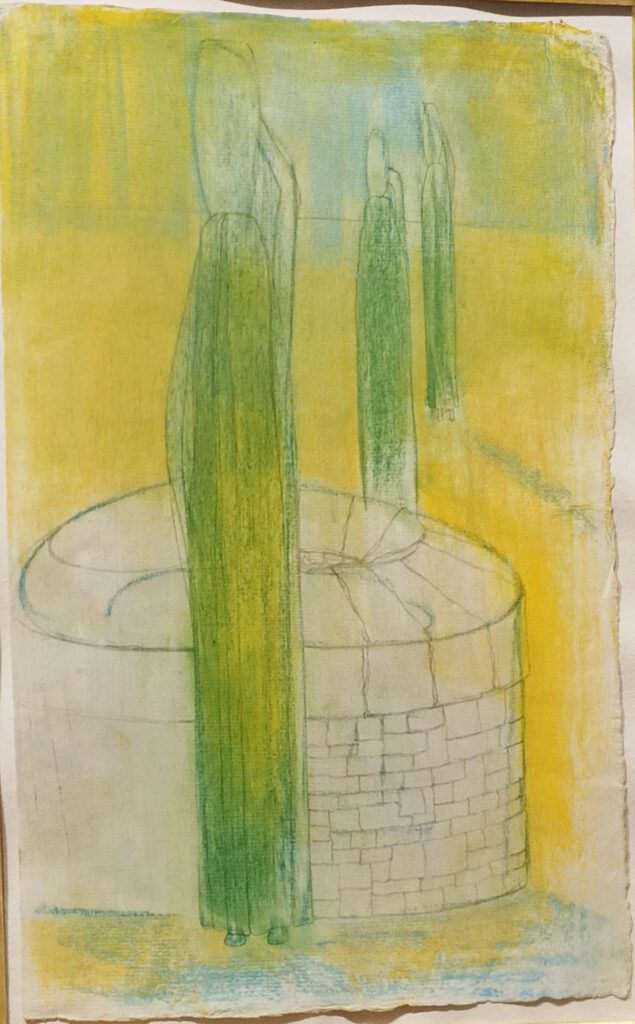
Something similar applies to this wonderful pastel, based on Maurice Maeterlinck’s books. Unfortunately, I’d only ever seen this Edvard Munch-esque early drawing in a black-and-white photograph. It’s one of my personal favourites. It’s unmistakably quirky and delightfully weird – typical De Nerée!
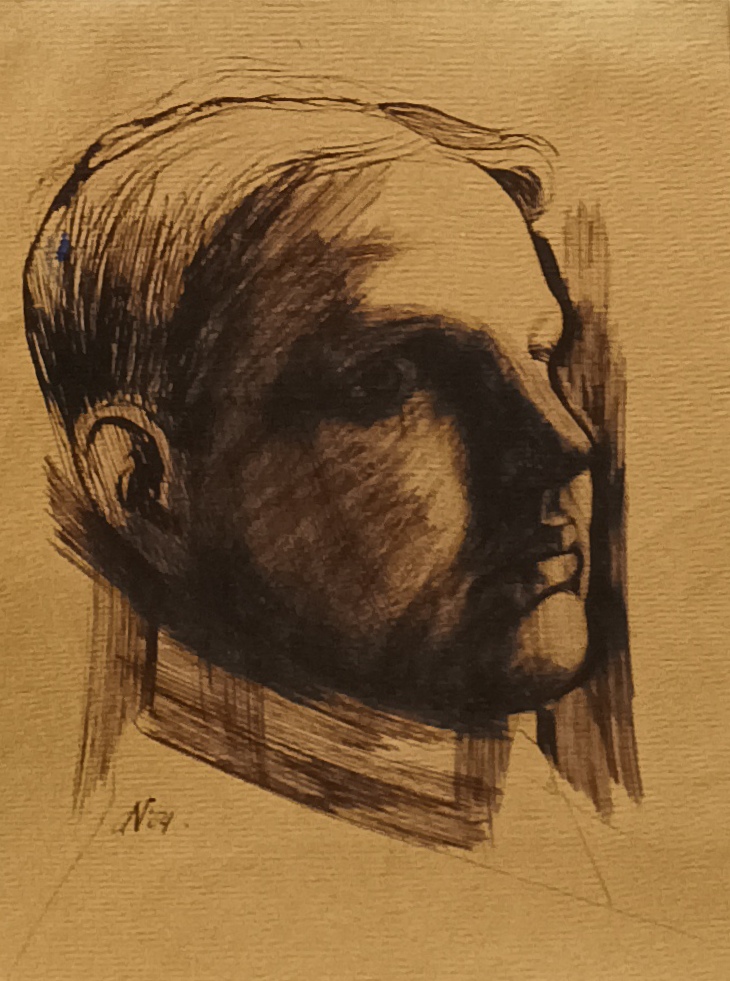
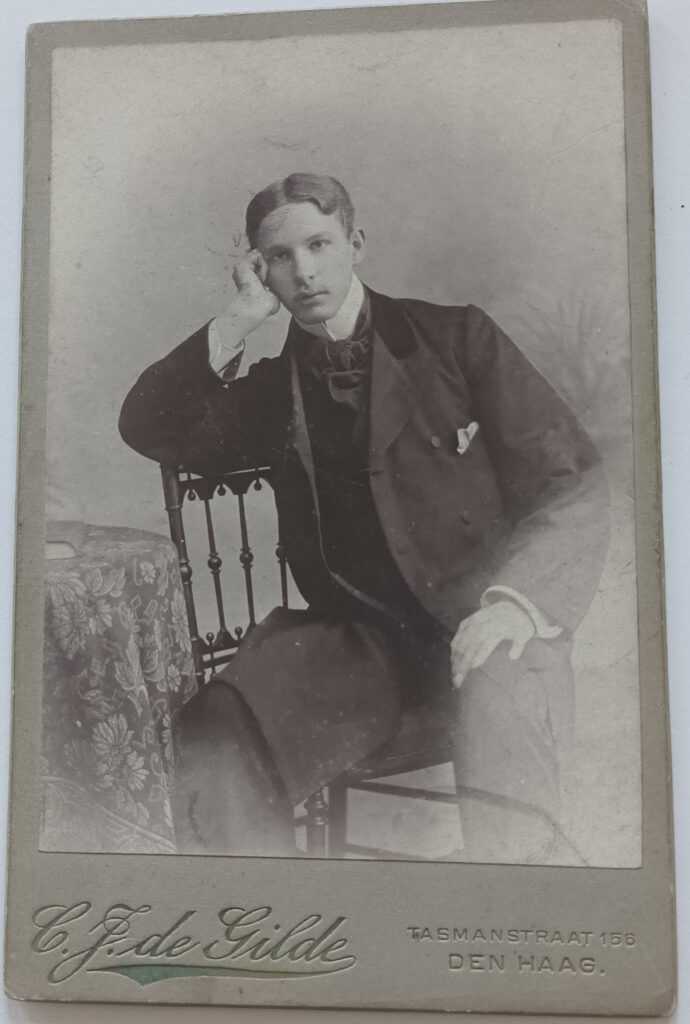
Both the serious and the dandyish sides of De Nerée are captured in two original photographs, which are also on display. The impressive self-portrait from 1904 ties in closely with this. For those with an interest in Dutch literature history, it may be worth noting that the self-portrait was long owned by the Haarlem artist Harry Prenen, known for his illustrations for his friend Godfried Bomans. Prenen once gave Bomans a nude drawing by De Nerée for his birthday, which he had bought in Haarlem from J.H. de Bois. It is not known what Bomans thought of it, nor exactly which drawing it was.
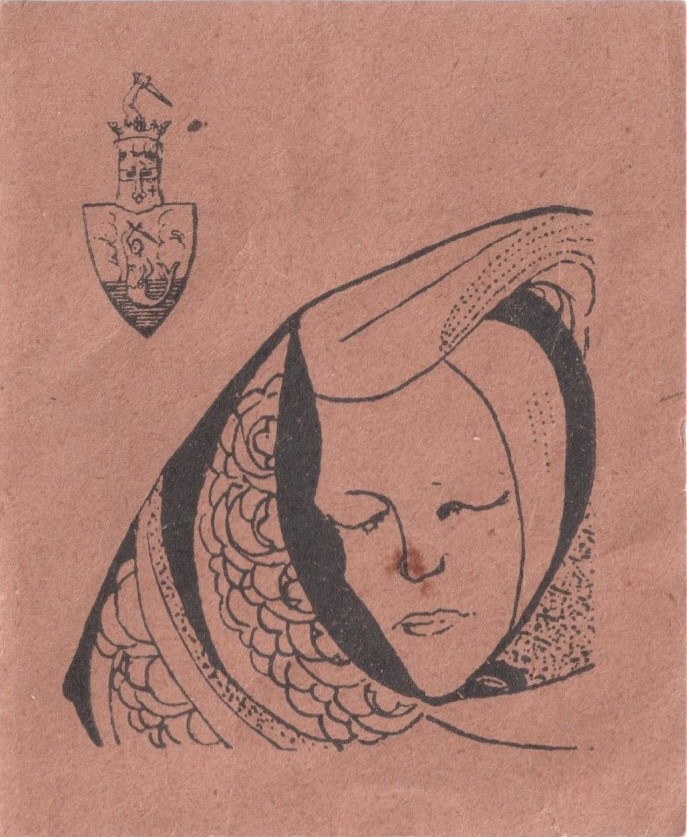
De Nerée was an avid reader of modern literature as well as a discerning bibliophile. It is all the more regrettable that, at the time of writing, I have managed to trace no more than a handful of books that once belonged to him. This loss is compensated for by the existence of a bookplate designed by him. Only a few of these have survived, making them incredibly rare as well.
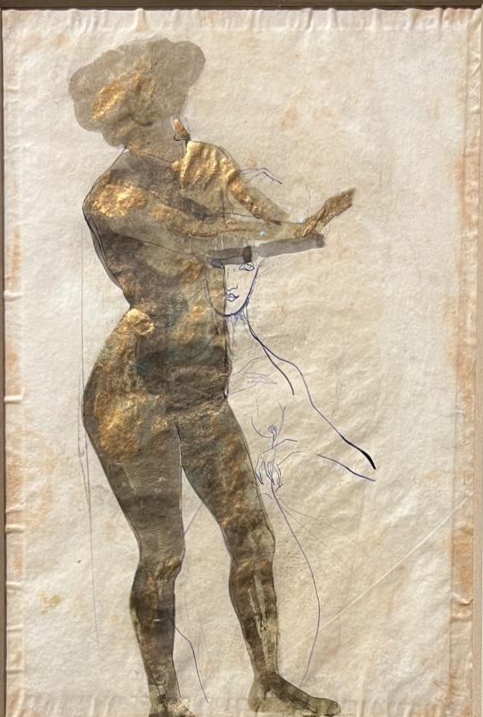
Although most people know De Nerée as an artist in the style of Toorop, Beardsley and Klimt, towards the end of his life he produced a very different kind of modernist work that is barely known, partly because many of these pieces seem to have vanished without a trace. Around 1905–07, his great inspiration was Ferdinand Hodler. This is evident from various distorted nudes in mountain landscapes that De Nerée drew in his own inimitable style. Had he lived longer and not died at the age of just 29, he might well have moved further in this direction. In my view, this sketch sheet can be viewed in that context. In works of this kind, he studied anatomy more closely and made greater use of monochrome areas of colour.
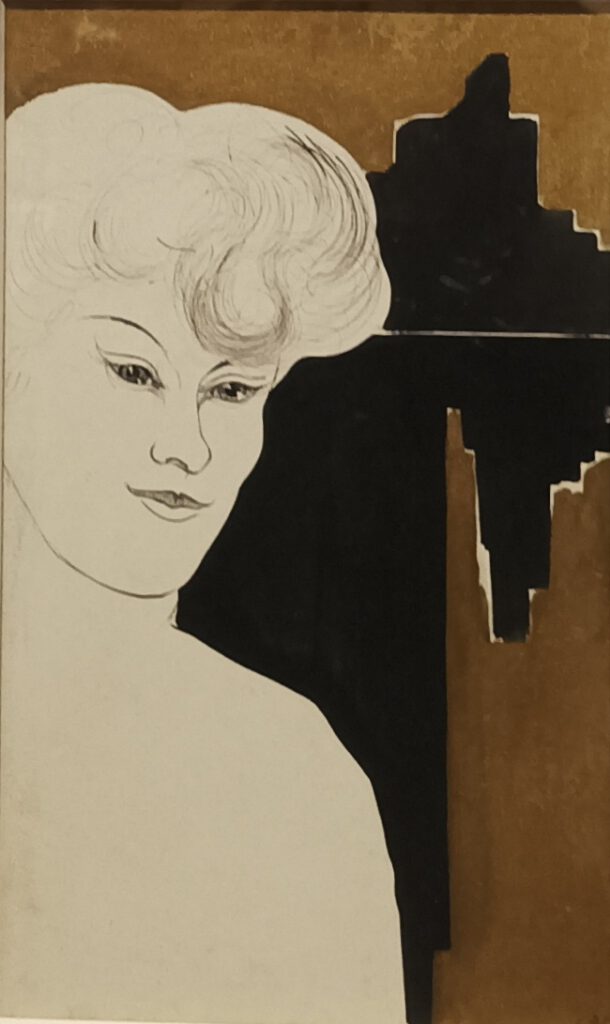
Another undeniable highlight is the portrait of Madame de Schestoff, whose enigmatic features were visible in various works at last year’s highly successful De Nerée exhibition at the Dordrechts Museum. Here too, De Nerée’s approach to art was thoroughly modern, certainly in the Netherlands of around 1900. The exhibition is rounded off with another lovely portrait of a woman, a superb Beardsley-esque drawing and a few interesting sketch sheets. I’d say, don’t miss it – go and see it!